
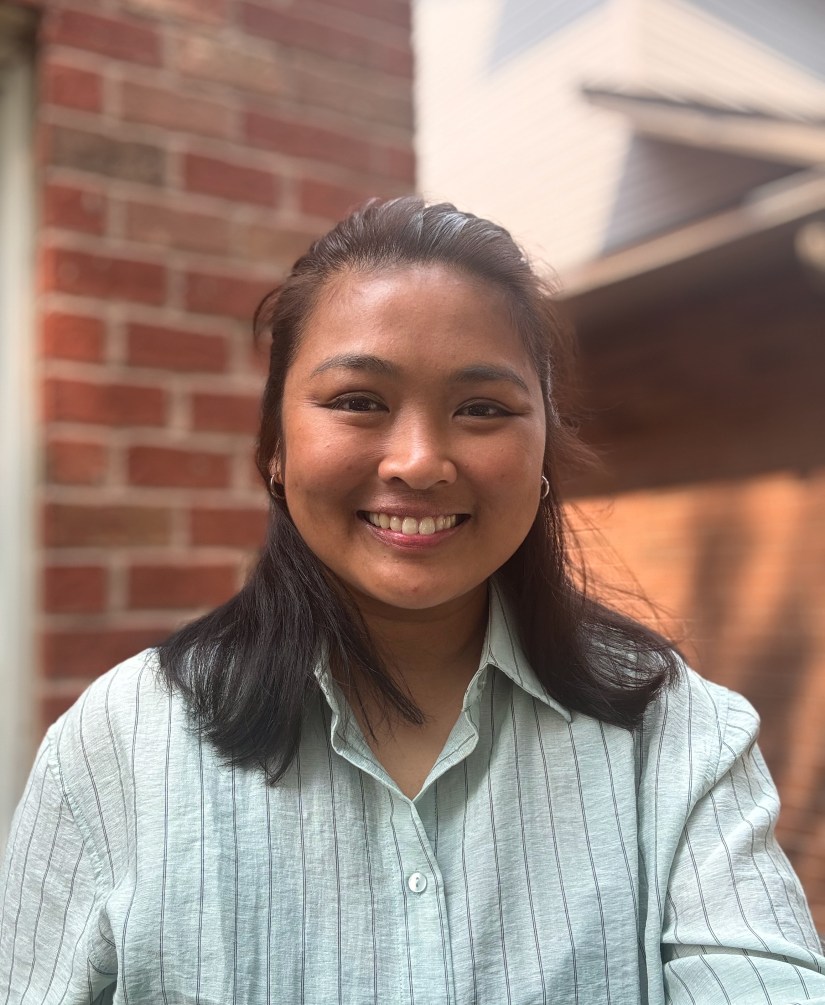
Steffi Tad-y is a disabled artist and writer from Manila. She is the author of two poetry books, From the Shoreline and Notes from the Ward, published Gordon Hill Press and a chapbook, Merienda, by Rahila’s Ghost Press. Her poems can be found in Room Magazine, Event, CV2, Midnight Sun, Open Minds Quarterly, and in anthologies such as Mandaragat: An Anthology of Filipino-Canadian Writing and Versus Versus: 100 Poems by Deaf, Disabled & Neurodivergent Poets. Her written work has received support from the BC Arts Council and Canada Council for the Arts.
Your two poetry books, From the Shoreline and Notes from the Ward are both deeply personal. What inspired you to put your experiences into words? What was the process like?
Ever since I was a child, I loved to read and write. Language, as poets would say, is bread: nourishment + sustenance.
From the Shoreline and Notes from the Ward were both shaped by my time in North America, Vancouver BC and Queens NY. It is in these cities where I first felt the pull of this art form and found people who were also drawn to it.
Over the years and eventually making my way back to Manila, I met friends who decided to spend their lives as its students, critics, and enduring champions. Their voices and their work inform not only my process but my life.
Because of my disability, I notice I write more when I’m manic and may write nothing at all when depressed. On days I think and feel ok, I write poems when time and space permits.
But overall, I just like scribbling on a notebook! My friend Alan Navarra said I like to paint with words. I was very encouraged by this.
You moved from Manila to Vancouver at twenty-two. How has being in a different country and cultural context specifically shaped your cycles of treatment and recovery?
Hm, this is a harder question to answer.
I was diagnosed with Bipolar I when I was about twenty-five when I had my first full blown manic episode at the University of British Columbia.
At that time, I was three years into living in Vancouver which is a world different from where I was born and raised. Looking back, I think the challenges of being a new immigrant, student, and partner just approached a level that my brain couldn’t comprehend.
Most of family and friends were back in Manila too.
At the same time, strong , grassroots organizing movements like Migrante BC which purchased an actual safe house for distressed migrants took me in countless times until I found my breath back.
I am forever grateful to Migrante BC for protecting migrants. If not for their struggle to keep Canadian business owners accountable for their repeated and exploitative practices against Temporary Foreign Workers (TFWs), 30,000 to 40,000 of whom are Filipinos.
If not for their collective efforts toward legal action in BC Courts, they would not have had the financial power to acquire a house for migrants that need sheltering. That house and the people in it became my shelter. Without them, I would not have recovered.
Lastly, my time in Canada has led me to learn, perhaps not only with my mind or heart or feet (which is a strengths-based, foundational way of how I make sense of the world as an intellectually disabled person – bottom up processing as opposed to top down), that bipolar is actually not just an issue of mood or behaviour or more painfully, a crack in who one is. Bipolar Disorder is a neurobiological condition.

